
The History of Rice
From a wild grass on the banks of the Yangtze to the staple that feeds half the world — the ten-thousand-year journey of a single grain.
A grain that fed civilisations
Rice is the edible seed of two grass species: Oryza sativa, or Asian rice, and the less common Oryza glaberrima, or African rice. In its domesticated form it is the staple food of more than half the world’s people — above all across Asia and Africa.
In 2023 farmers harvested some 800 million tonnes of it, making rice the third most-produced crop on Earth after sugarcane and maize. Yet the plant we know today began as a wild grass, gathered long before it was ever sown.
From wild grass to crop
Asian rice was first domesticated in China, by Neolithic communities living along the Upper and Lower Yangtze between roughly 13,500 and 8,200 years ago — a process usually dated to around nine thousand years back. Both of its great subspecies — the fluffy, long-grained indica and the sticky, short-grained japonica — descend from a single domestication of the wild rice Oryza rufipogon.
The decisive change was genetic: a mutation that stopped ripe grains from shattering off the stalk, so they could be harvested whole. Indica as we know it emerged later, when japonica reached India about 4,500 years ago and crossed with local wild and proto-indica rices. African rice, Oryza glaberrima, was domesticated entirely separately, in the inland delta of the Niger in West Africa around three thousand years ago.
With farmers, migrants and languages
From its Yangtze homeland, rice travelled outward. It reached the Sino-Tibetan cultures of northern China by about 6,000 years ago, and the Korean peninsula and Japan between roughly 5,500 and 3,200 years ago. Carried to Taiwan by the Dapenkeng culture, it then moved south with the great Austronesian migrations into Island Southeast Asia and on to Madagascar and Guam — though it did not survive the longer voyages into the wider Pacific.
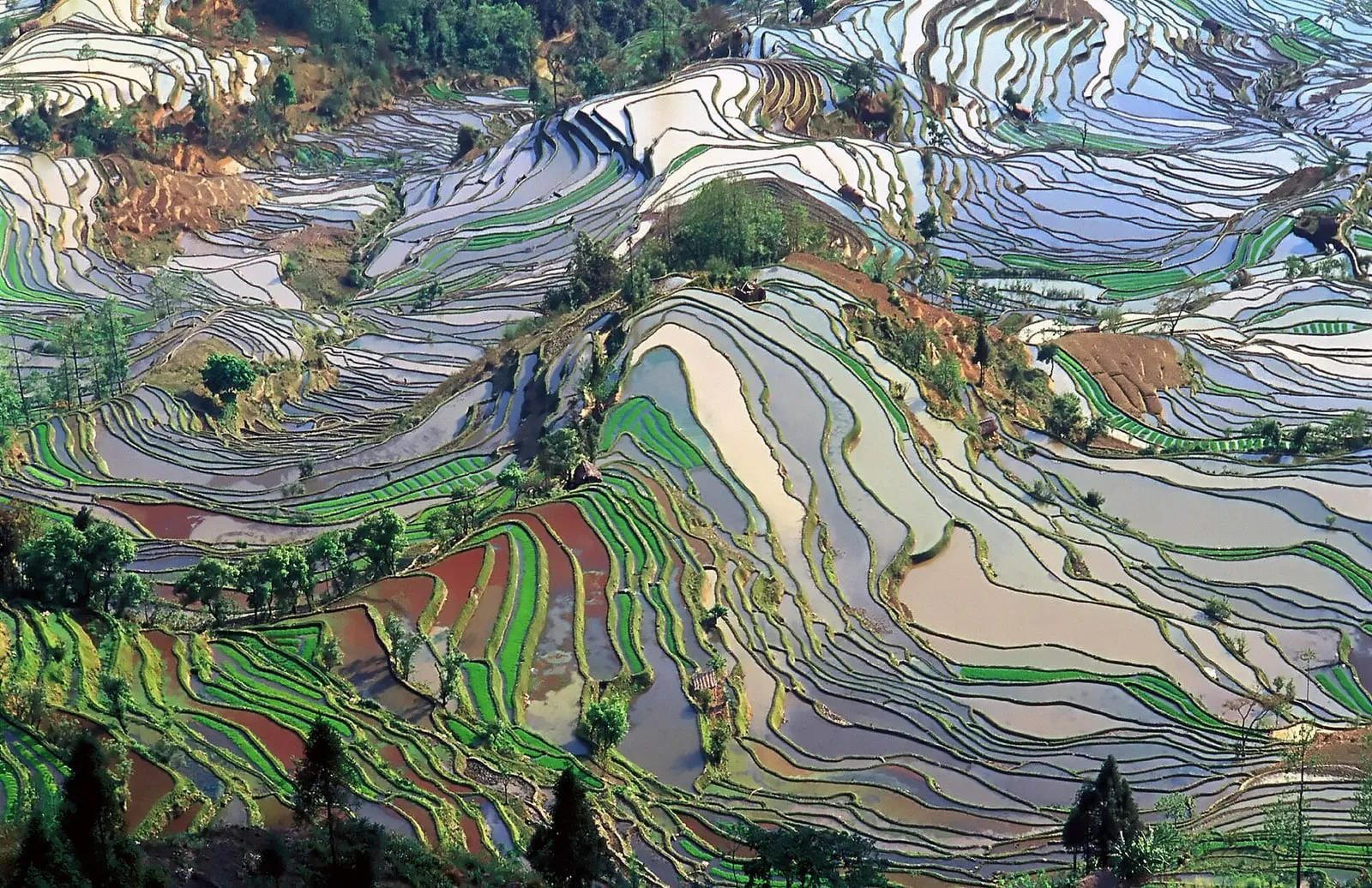
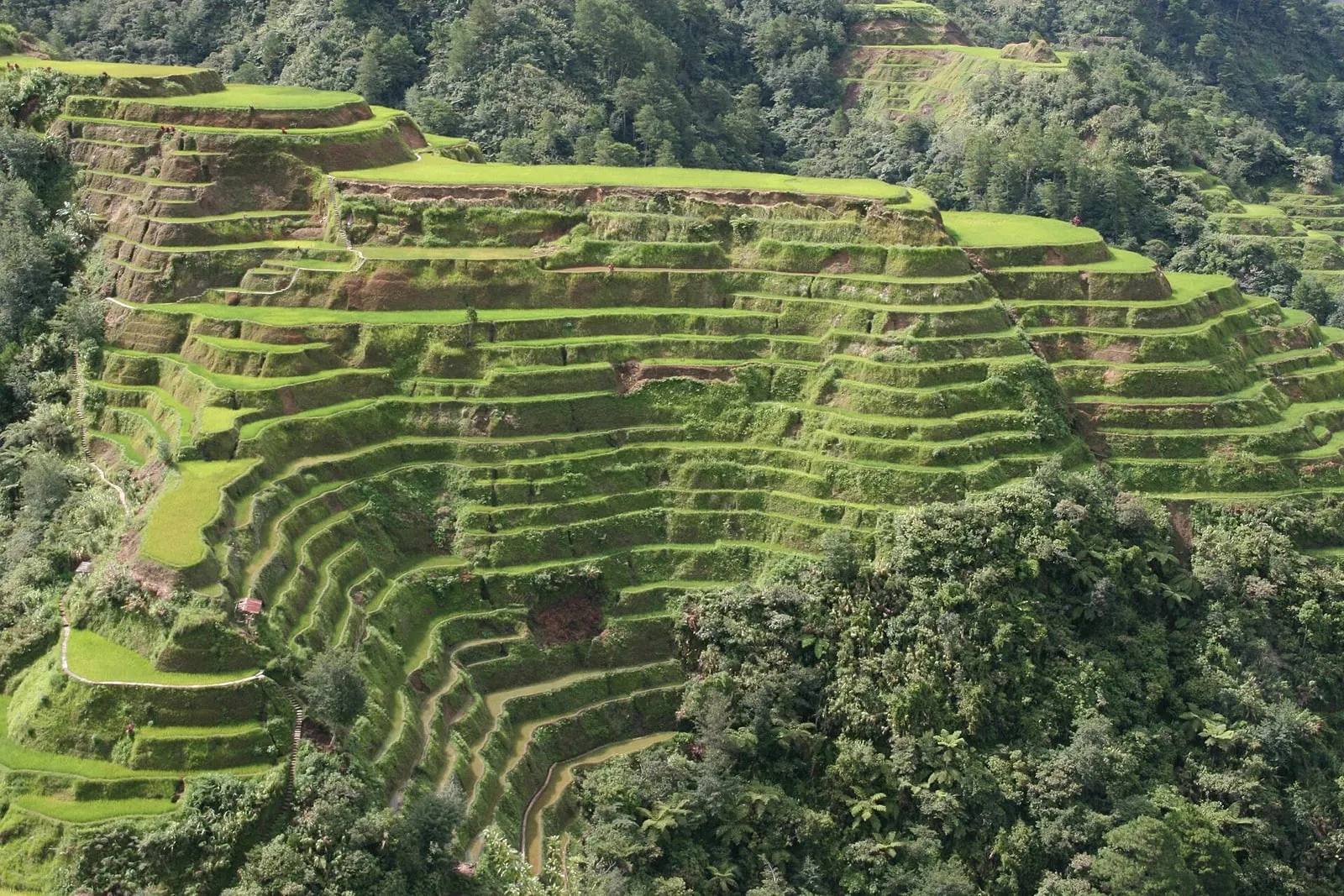
By about 5,000 years ago it had reached Austroasiatic and Kra-Dai–speaking peoples across mainland Southeast Asia and southern China. Wherever it went, rice reshaped the land: the flooded paddy and the mountainside terrace became some of the most enduring works of human agriculture.
How rice travelled the world
- Northern China — Sino-Tibetan cultures
- Korea & Japan
- Taiwan → Island SE Asia → Madagascar & Guam
- Mainland Southeast Asia & southern China
- India — indica emerges
- Middle East, Mediterranean & Europe
- The Americas — after 1492
- Independent lineWest Africa → Oryza glaberrima
Schematic — simplified for clarity.
Along the old trade routes
Trade and conquest carried rice westward out of Asia. It was known in Mesopotamia and Persia in antiquity, and spread through the Mediterranean world. In the medieval period Arab agriculture carried it across North Africa and into al-Andalus, and by the fifteenth century it had reached the Po Valley of Italy.
In West Africa, meanwhile, communities had long grown their own native Oryza glaberrima. A hardy, water-loving crop able to feed dense populations, rice wove itself into the cuisine and economy of every region it entered.
Across the Atlantic
Rice crossed the Atlantic as part of the Columbian Exchange — the vast transfer of crops, animals and people that followed 1492. Asian rice arrived with European colonists, while African rice was carried to the Americas by the Spanish, together with the knowledge of enslaved West Africans who understood how to grow it.
In the tidal lowlands of the Carolinas rice became a plantation crop of enormous value. By the eve of the American War of Independence it ranked as the fourth most valuable export of British North America, behind only tobacco, wheat and fish.
A revolution in the harvest
For all its importance, rice is mostly eaten close to where it is grown: even today, less than a tenth of the harvest — under 8% — is traded across borders. The twentieth century transformed how much could be grown.
During the Green Revolution, researchers at the International Rice Research Institute in the Philippines released IR8 in 1966 — a high-yielding variety bred from a Chinese and an Indonesian parent, with short, strong stems that could carry heavy grain without toppling. In 2005 rice became the first crop plant to have its full genome sequenced. Today China and India together grow more than half the world’s rice, and around 90% of it is still produced in Asia — where the whole story began nine thousand years before.
| India | 207 | |
|---|---|---|
| China | 207 | |
| Bangladesh | 59 | |
| Indonesia | 54 | |
| Vietnam | 43 | |
| Thailand | 33 |
Milestones in the story of rice
- ≈ 9000 BPAsian rice domesticated along the Yangtze, China
- ≈ 6000 BPRice reaches northern China
- 5500–3200 BPSpreads to Korea and Japan
- 5500–4000 BPCarried to Taiwan; Austronesian expansion begins
- ≈ 5000 BPEstablished across mainland Southeast Asia
- ≈ 4500 BPJaponica reaches India; indica emerges
- ≈ 3000 BPAfrican rice domesticated on the Niger
- after 1492Rice enters the Americas via the Columbian Exchange
- 1966IR8, the first Green Revolution rice, released by IRRI
- 2005Rice is the first crop with a fully sequenced genome
- 2023World harvest reaches 800 million tonnes
The Grain Itself
Botany, cultivation and the modern table — how a wild grass became the food on the plate.
What rice actually is
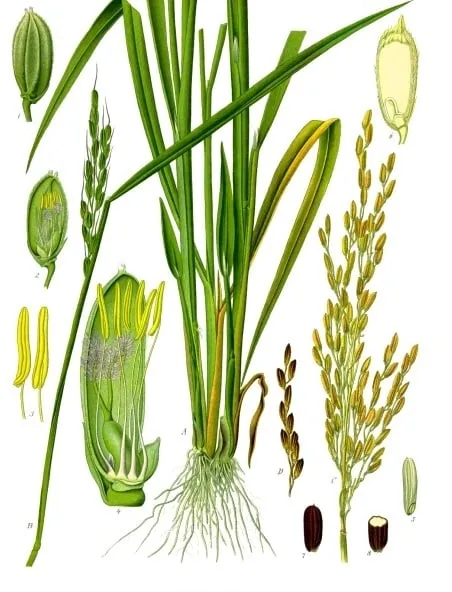
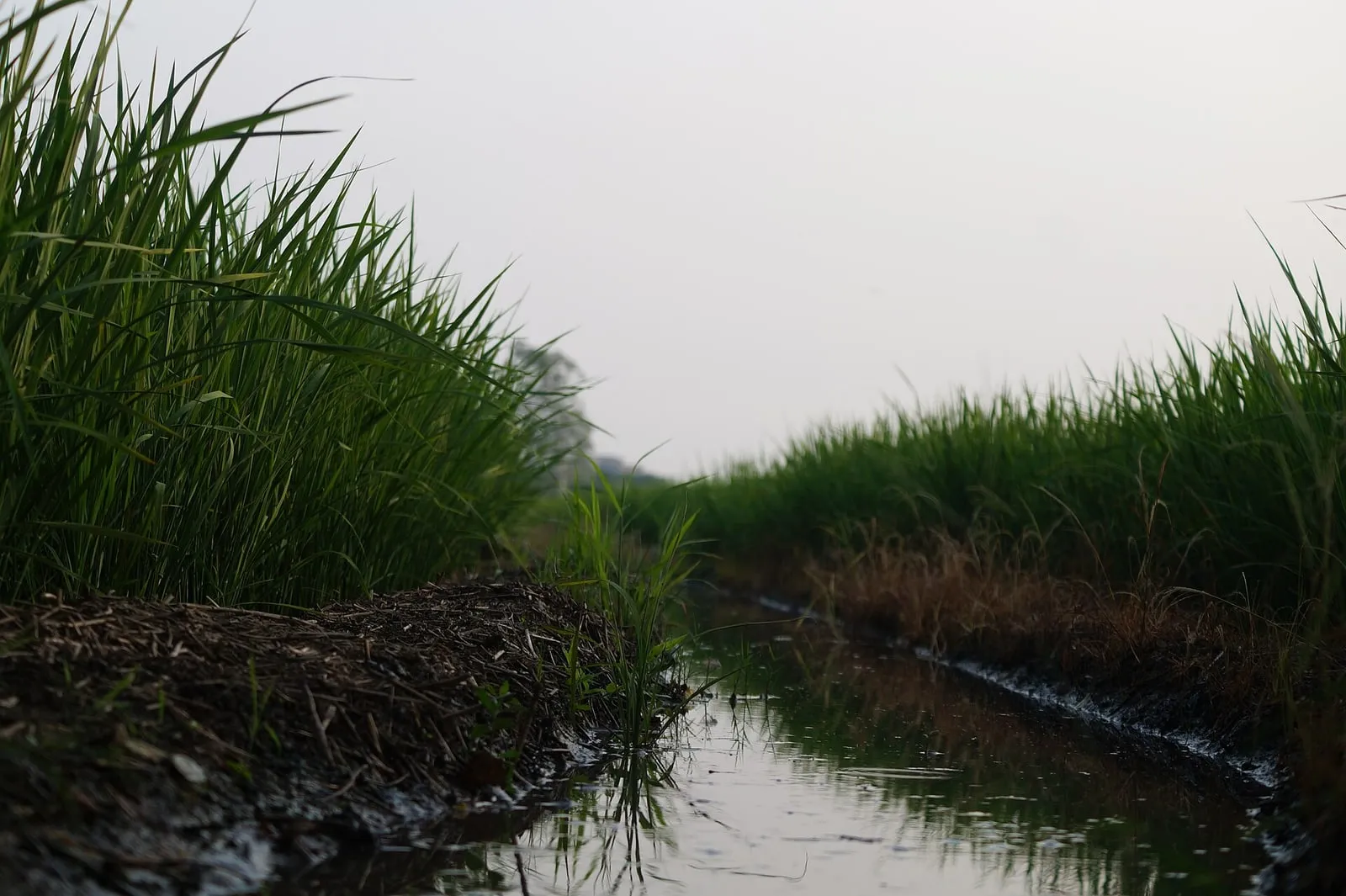
Rice is an annual grass of the genus Oryza. The plant throws up hollow, jointed stems that stand between one and 1.8 metres tall — though deepwater varieties, racing a rising flood, can reach five. Its long, slender leaves give way at the top to a branching flower-head, the panicle, and it is largely self-pollinating.
Each tiny flower can set a single grain — the caryopsis — five to twelve millimetres long, sealed in a tough husk. From sowing to harvest takes roughly three to six months. Alone among the world’s great cereals, rice is semi-aquatic: it thrives with its roots in standing water, where wheat or maize would simply drown.
- Height
- 1–1.8 m
- to 5 m in deepwater
- Panicle
- 30–50 cm
- branching flower-head
- Season
- 3–6 months
- sowing to harvest
Grown in water
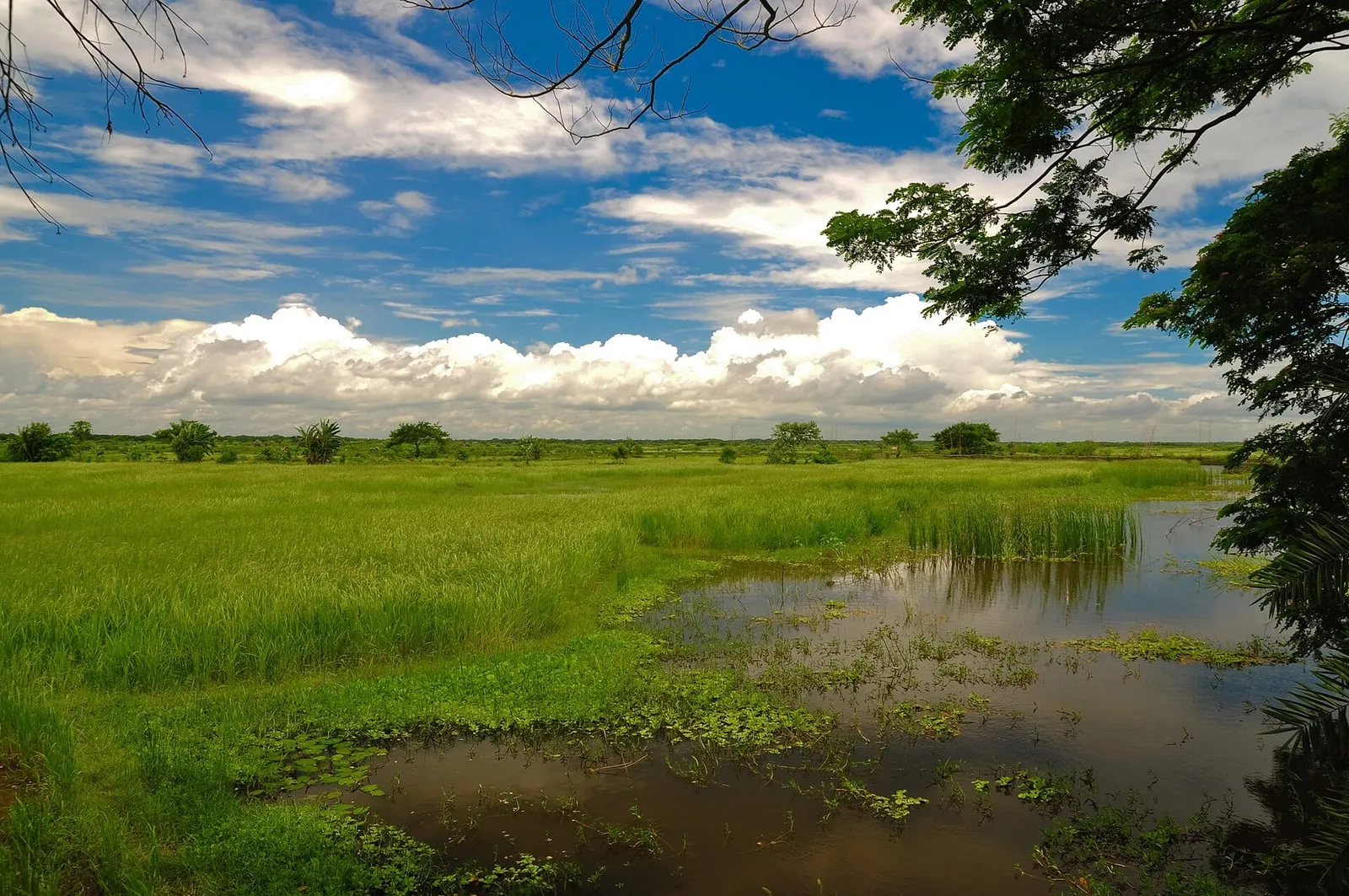
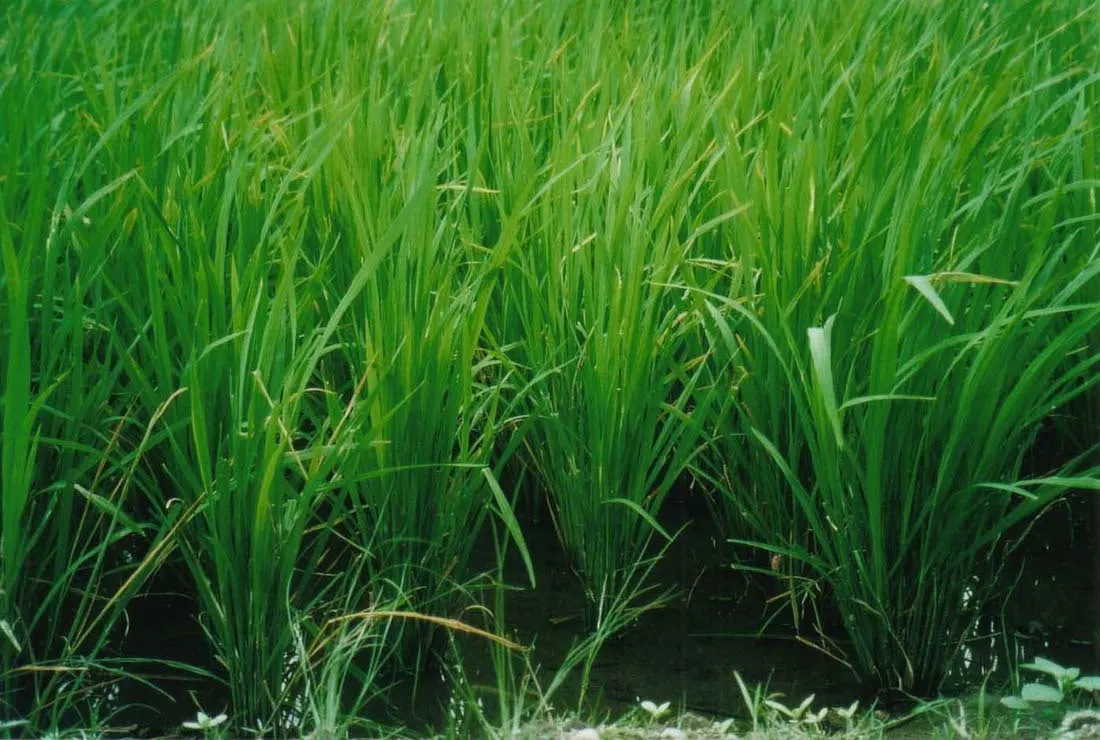
Most rice is grown in flooded fields called paddies. The standing water is not just drink for a thirsty plant; it is a tool. A sheet of water smothers weeds and denies many pests a foothold, letting rice outcompete almost everything around it.
Farmers work it two ways. Lowland or “wetland” rice, by far the greater share, sits in bunded fields kept deliberately flooded; upland rice grows dry on rain alone. Seedlings are often raised in a nursery and transplanted into the mud by hand, one clump at a time — and on steep ground the paddies climb the hillside in terraces that are among the oldest engineered landscapes on Earth.
From husk to grain
Rice is cut when the grain hardens and the plant turns gold. It is threshed to shake the grain loose, then dried. Still sealed in its inedible husk, it is now “paddy”, or rough rice — and what happens next decides what reaches the plate.
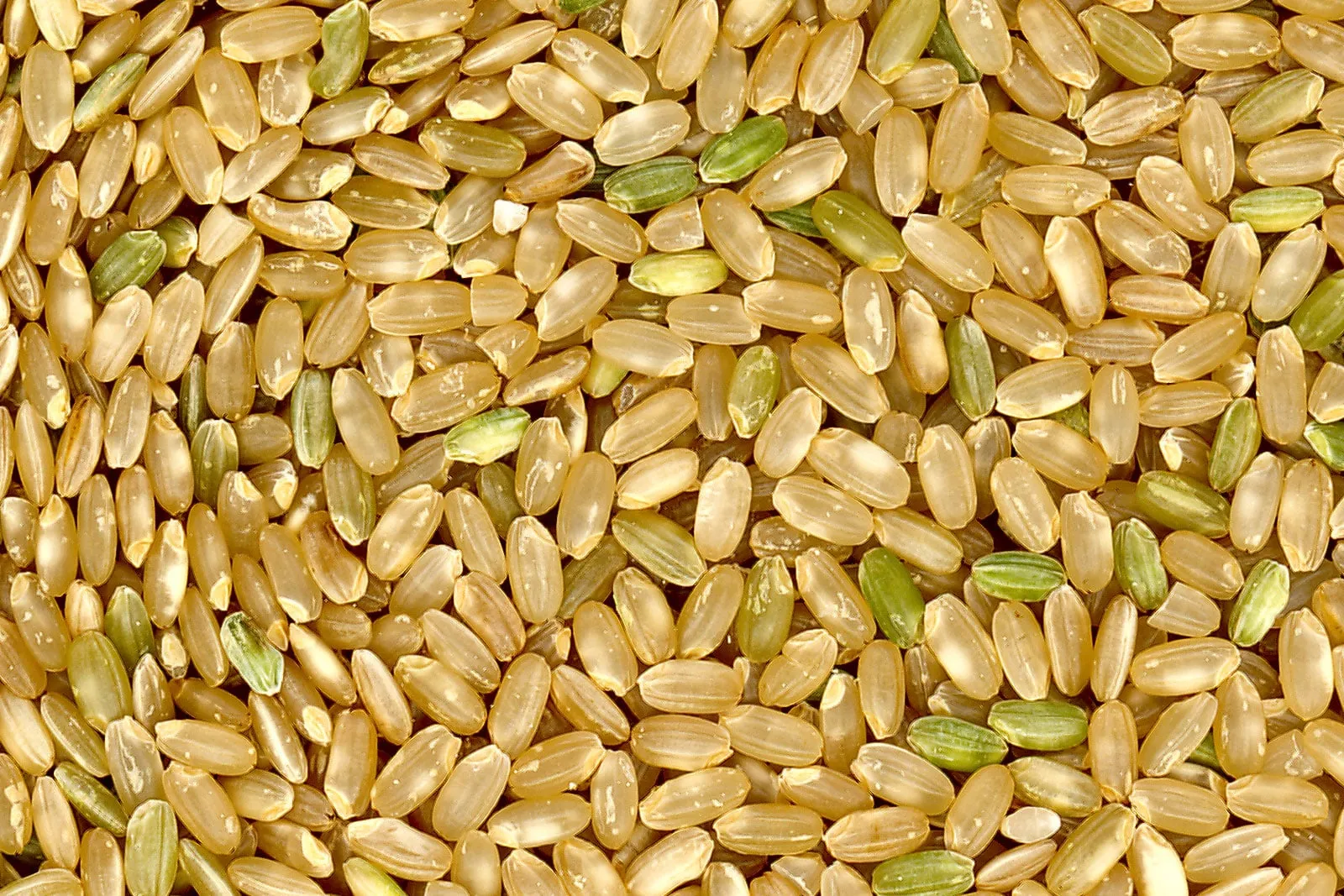
Strip away the husk and you have brown rice, which keeps its bran and germ. Polish those away too and you have white rice: longer-lasting and quick to cook, but stripped of much of its goodness. Parboiling — soaking and steaming the paddy before milling — drives its vitamins inward and yields the golden “sella” grain so prized across South Asia and the Gulf.
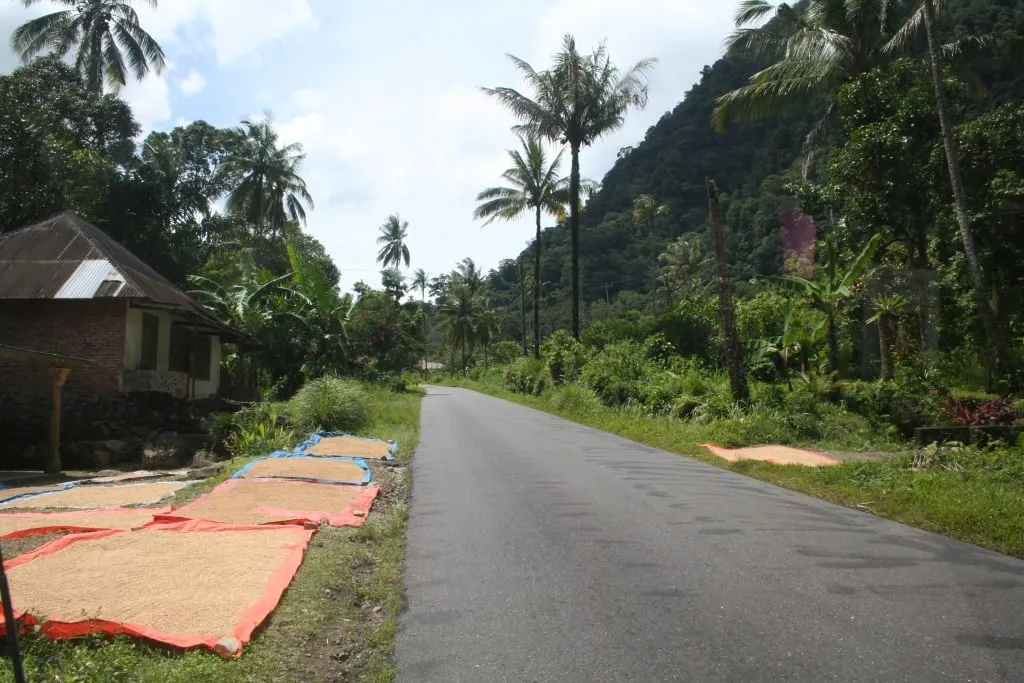
- Paddygrain in the husk
- Brown ricehusk off · bran kept
- White ricebran & germ polished away
One species, thousands of grains
Rice is sorted first by the length of its grain and by how it behaves in the pot. Within a single species sit more than forty thousand named cultivars, and the world’s gene banks guard well over a hundred thousand more.
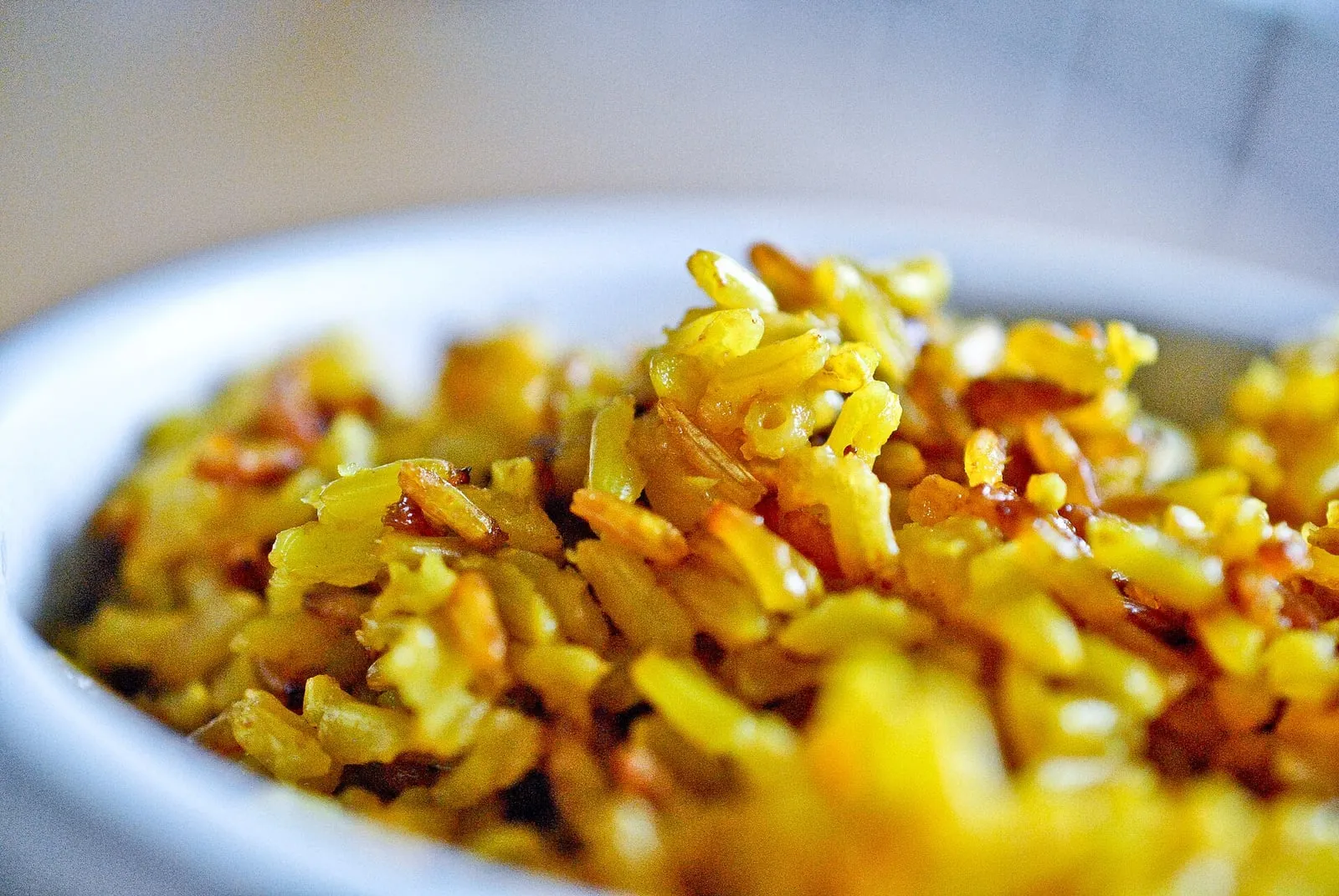
The slender, perfumed long-grain of India and Pakistan — the heart of biryani, mandi and kabsa.Larry Hoffman · CC BY-SA 3.0 BasmatiLong-grain · aromatic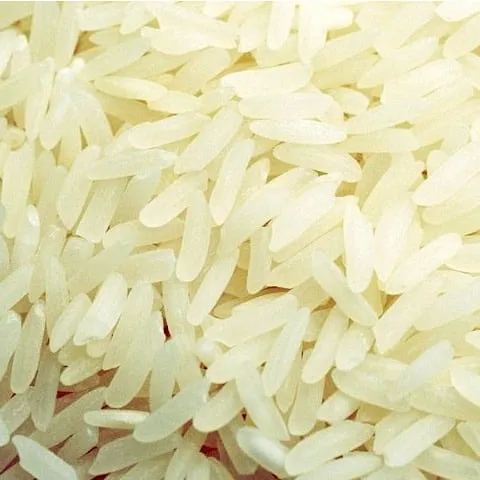
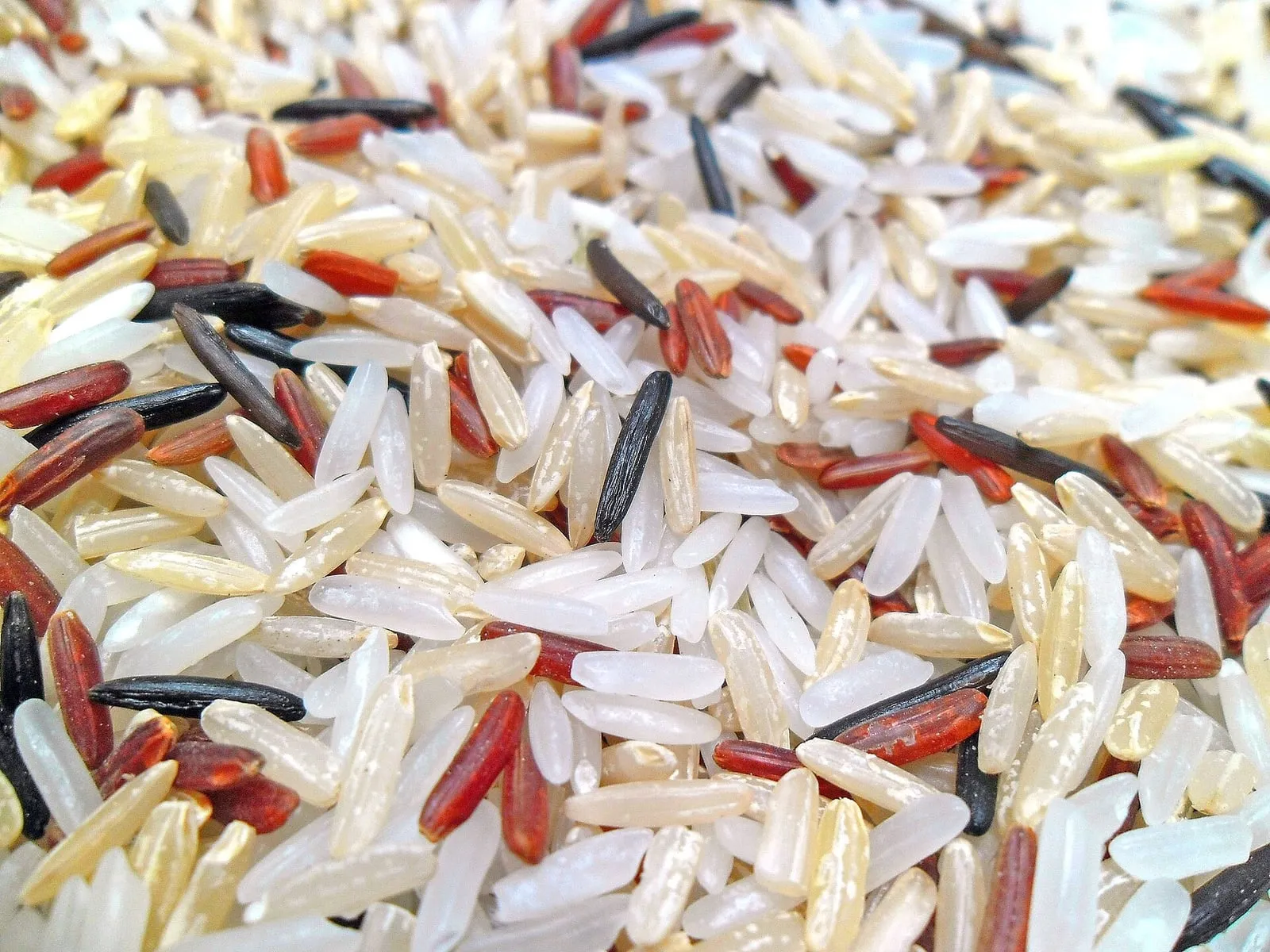
Milled and polished smooth; the everyday grain on most of the world’s tables.Lucy Gull · CC BY-SA 3.0 Polished whiteShort–mediumHusked but never polished, keeping bran and germ for a nutty bite and more fibre.Unknown · CC BY-SA 3.0 Whole-grain brownBran retained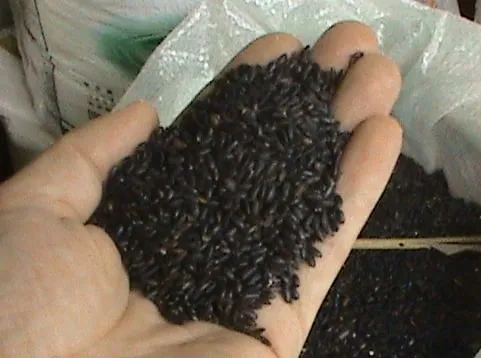
Coloured deep by anthocyanins in the bran — black “forbidden” rice and red rice among them.Anna Frodesiak · Public domain Black & redPigmented
- Jasmine · Thai fragrant
- Glutinous · sticky
- Arborio · risotto
- Japonica · sushi
- Indica · long-grain
The scent of an aromatic rice comes from a single compound — 2-acetyl-1-pyrroline — the same molecule in basmati and jasmine alike.
What a bowl of rice gives you
Rice is, above all, starch — a clean, digestible source of energy, and naturally free of gluten. Across the planet it supplies close to a fifth of all the calories people eat.
Milling comes at a cost: white rice sheds much of the grain’s fibre, B-vitamins and minerals along with its bran, which is why many countries fortify it or favour parboiled rice. Brown rice keeps the bran and germ, and with them more fibre, magnesium and B-vitamins.
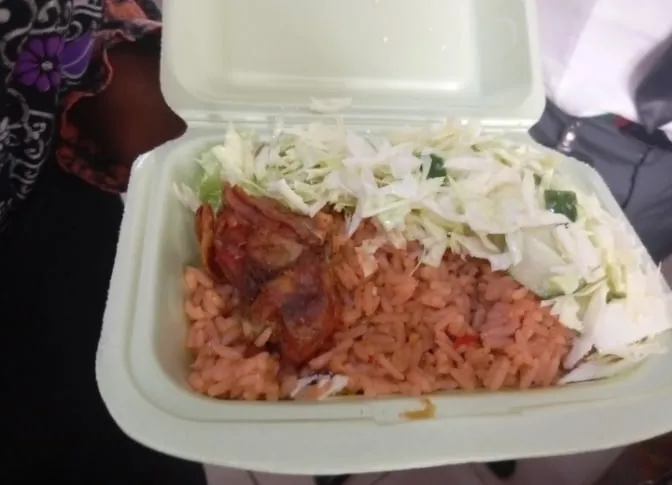
- Energy
- 130 kcal
- Carbohydrate
- 28 g
- Protein
- 2.7 g
- Fat
- 0.3 g
- Fibre
- 0.4 g
Naturally gluten-free · about a fifth of the world’s dietary energy
The grain and the greenhouse
The very flood that makes a paddy so productive also makes it breathe methane — a greenhouse gas far stronger than carbon dioxide. Rice growing is among the largest human sources of it, and a hotter, saltier, less predictable climate now threatens the very deltas where rice grows best.
So breeders keep remaking the plant — for higher yield, for less water, for grains that can survive flood, drought and salt. A crop ten thousand years in the making is still being redrawn.
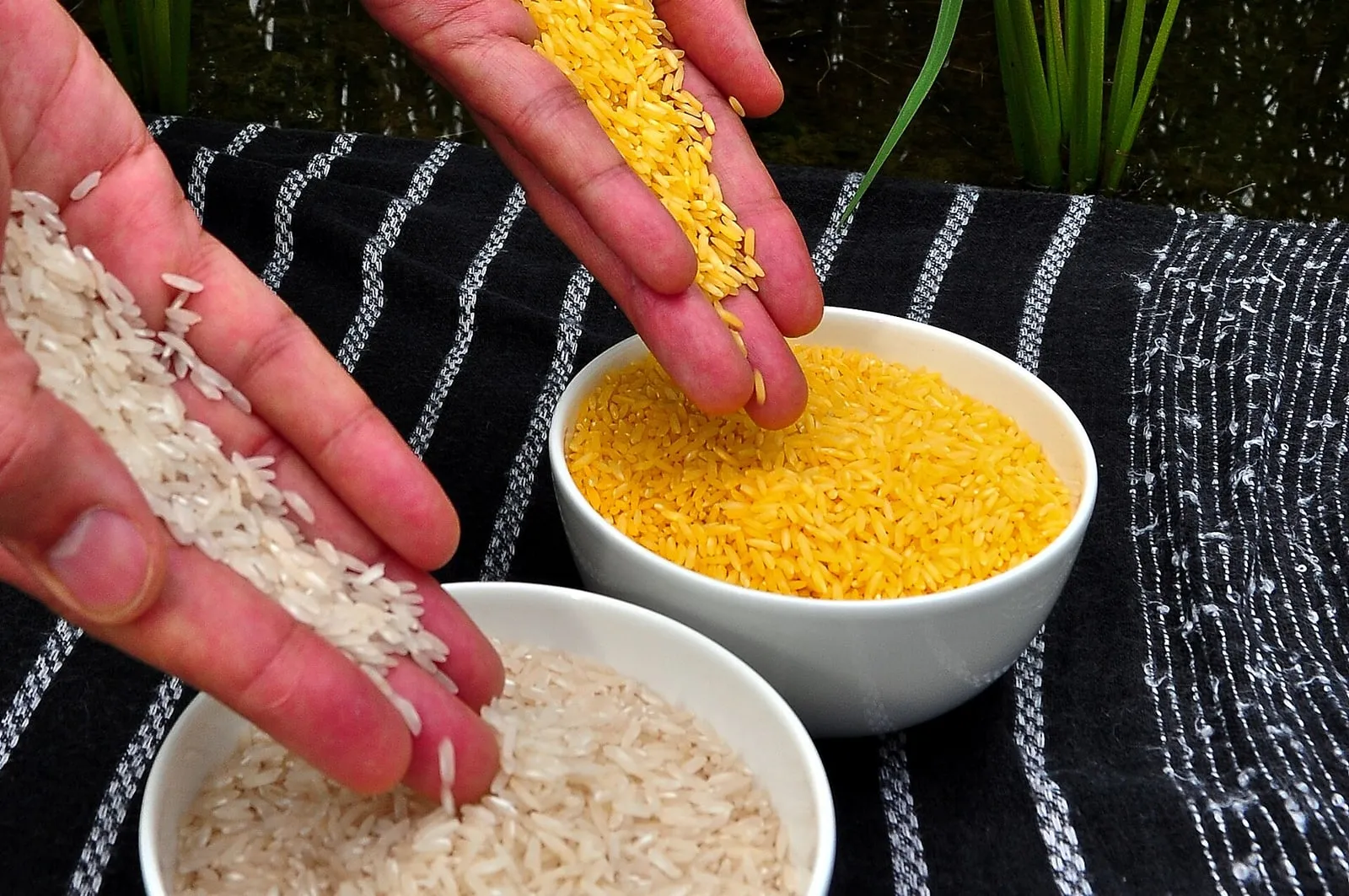
Golden Rice
Engineered to make beta-carotene — a source of vitamin A — to fight childhood blindness.
“Scuba” rice
Carrying the SUB1A gene, it can survive two full weeks underwater.
Sequenced, 2005
Rice was the first crop plant to have its whole genome read.